
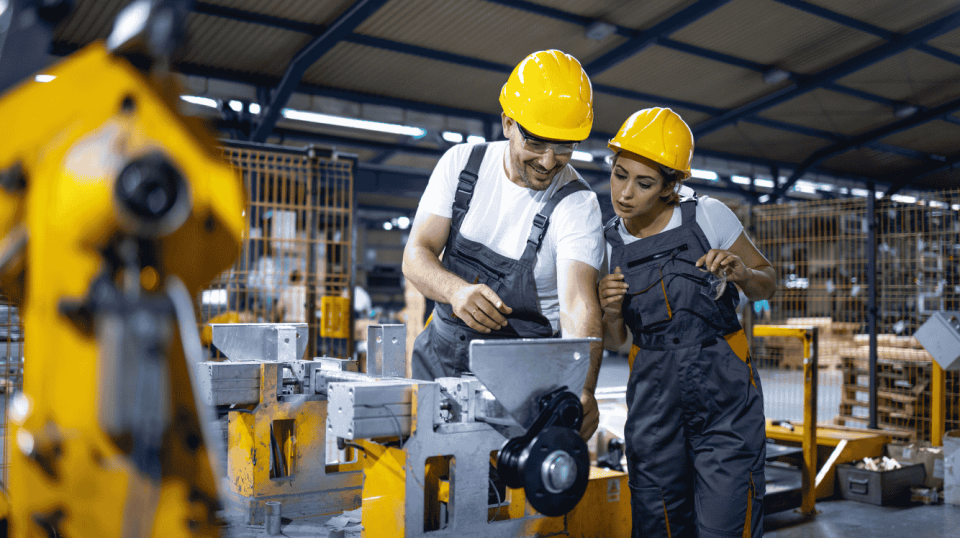
The word industry once conjured images of towering smokestacks, roaring assembly lines, and soot-covered workers fueling the economic engines of the 19th and 20th centuries. It was the age of the Industrial Revolution, a transformative period that reshaped societies, propelled global trade, and cemented manufacturing as the backbone of national economies. Today, however, industry is undergoing another profound metamorphosis—one defined not by coal and steel, but by code, sustainability, and innovation. To understand modern industry is to examine a system in flux, straddling legacy infrastructure and futuristic ambition, efficiency and ethics, tradition and transformation.
Industry in the 21st century has expanded well beyond the conventional sectors of manufacturing and construction. It now encompasses an intricate network of digital, creative, and knowledge-driven enterprises. The rise of Industry 4.0—a term denoting the fourth industrial revolution—has brought forth an era defined by automation, data exchange, cyber-physical systems, and the Internet of Things (IoT). Factories are no longer simply physical spaces filled with machines; they are smart, interconnected hubs where AI-driven algorithms fine-tune production in real time and predictive maintenance prevents costly downtime.
This digital transformation is not limited to manufacturing alone. Sectors once deemed slow to adapt—such as agriculture, logistics, and energy—are now leveraging advanced technologies to optimize operations and reduce environmental footprints. Precision farming, powered by drones and satellite imaging, is redefining agriculture; blockchain is revolutionizing supply chain transparency; and renewable energy technologies are disrupting traditional power grids. The lines between industries, once rigid and siloed, are becoming increasingly blurred as convergence becomes the norm.
One of the defining characteristics of modern industry is its global nature. Production networks now span continents, with raw materials sourced from one region, assembled in another, and sold globally. This interdependence has enabled unprecedented efficiency and scale, but it has also introduced vulnerabilities. Events such as the COVID-19 pandemic and geopolitical conflicts have exposed the fragility of global supply chains, prompting a reevaluation of just-in-time manufacturing and spurring discussions about regionalization and supply chain resilience.
With the growth of global industry comes an intensified focus on sustainability. Industrial activity has long been associated with environmental degradation—pollution, deforestation, and greenhouse gas emissions. Today, however, a shift is underway. Businesses are increasingly held accountable not only for their financial performance but also for their environmental and social impact. Terms like “circular economy,” “carbon neutrality,” and “sustainable sourcing” are no longer jargon; they are strategic imperatives. Forward-looking companies understand that environmental stewardship is not merely a regulatory necessity, but a competitive advantage.
Industries that once prioritized cost-cutting at the expense of the environment are now investing in cleaner technologies and greener practices. Steel manufacturers are experimenting with hydrogen-based production, aiming to decarbonize one of the most emissions-intensive sectors. Textile companies are developing biodegradable fabrics and closed-loop recycling systems. Even traditionally high-polluting industries like cement and chemicals are exploring carbon capture and utilization technologies. The push for sustainability is no longer a fringe movement; it is a defining trend reshaping industrial strategy across the globe.
Equally important in this industrial renaissance is the human element. As automation and artificial intelligence become more integrated into industrial processes, questions about the future of work have taken center stage. Fears of job displacement coexist with the promise of new roles and opportunities. The reality is nuanced. While certain routine tasks may be rendered obsolete, emerging technologies are also creating demand for skilled labor in fields such as robotics, data science, and systems engineering. The challenge lies in ensuring that the workforce is equipped to transition smoothly—through reskilling initiatives, vocational training, and a reimagining of education systems to align with the needs of the modern economy.
Another pressing concern in contemporary industry is the ethical dimension of growth. Globalization has enabled companies to tap into low-cost labor markets, often raising concerns about working conditions, wage disparities, and labor rights. Consumers and investors alike are demanding greater transparency and ethical accountability. Industrial firms must now grapple with how their operations affect not only the environment but also the communities in which they operate. Ethical sourcing, fair labor practices, and community engagement are no longer optional—they are integral to a company’s reputation and long-term viability.
Moreover, the geopolitical landscape continues to influence industrial strategy. Trade tensions, sanctions, and shifting alliances can all have a ripple effect on industrial supply chains and market access. As nations seek to bolster domestic industries and reduce reliance on foreign suppliers, industrial policy is becoming a central focus of government agendas. Industrial self-sufficiency, once a protectionist notion, is now being reframed as a strategic imperative, particularly in critical sectors such as semiconductors, pharmaceuticals, and energy.
Despite these challenges, the outlook for industry is one of cautious optimism. Innovation remains the beating heart of industrial progress. From 3D printing and nanotechnology to quantum computing and bioengineering, the frontier of possibility continues to expand. The key to harnessing this potential lies in collaboration—between government and business, academia and industry, technology and humanity.
In this complex and rapidly evolving landscape, industry can no longer be seen as a monolith or a relic of a bygone era. It is a living, breathing system, constantly adapting to technological advancements, societal expectations, and environmental imperatives. The companies and countries that succeed will be those that approach industry not merely as a means of production, but as a platform for innovation, inclusion, and long-term sustainability.
In conclusion, the story of industry today is not one of decline but of reinvention. It is a narrative shaped by resilience, reimagination, and responsibility. As we look to the future, industry must embrace its role not only as a driver of economic growth but as a custodian of planetary and human well-being. This is not only possible—it is essential. The choices we make now will determine whether the industrial age ahead will be defined by extraction and excess, or by regeneration and renewal.